SAT Words Worth Reviewing: High-Frequency Vocab
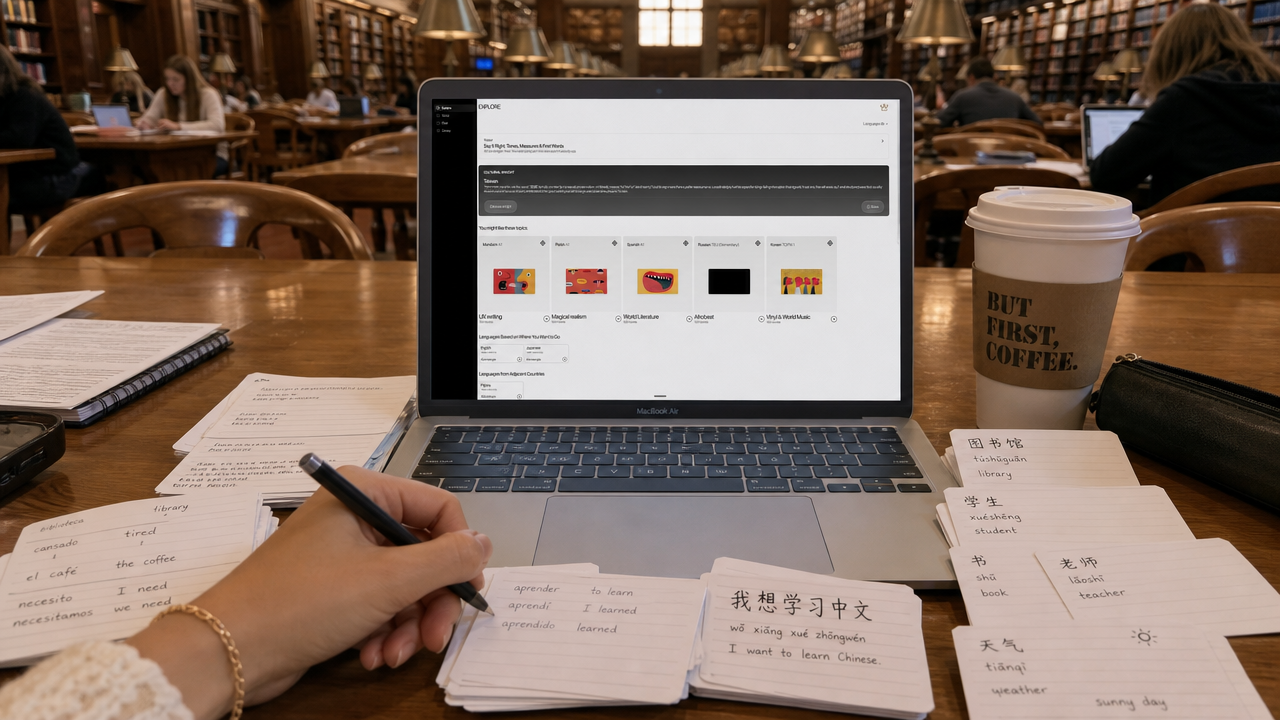
SAT words are still worth your time, but only if you study them the way the Digital SAT actually uses them. You are not being asked to memorize a cabinet of curiosities. You are being asked to read precisely, pick up an author’s meaning quickly, and choose the one answer choice that fits the logic of the sentence.
So let’s keep this practical. Below you will get a sane target for how many words to learn, a short list of high-frequency SAT words worth reviewing, and a study routine you can run even when your schedule is messy. Think of it as a sat vocabulary list you can actually finish.
SAT words: what the Digital SAT really tests now
If you have old-school SAT flashbacks, you are not imagining it. The test used to lean harder on obscure, “who talks like that?” vocabulary. The Digital SAT has moved toward what teachers often call Tier 2 academic vocabulary, meaning words you will see in serious reading across subjects but probably will not hear in everyday conversation.
These are the words that help a passage do its job: qualify a claim, show cause and effect, signal doubt, or pin down an argument’s tone. That is why words like mitigate, equivocal, pragmatic, and ubiquitous keep reappearing. They are not “SAT-only.” They are “college-reading often.”
If you want a reality check, it helps to look at analyses that pull vocabulary from official-style practice. One solid baseline is the PrepScholar SAT vocabulary words analysis, which focuses on a recurring pool rather than pretending there is one mythical mega-list.
How many SAT words should you learn (and why “more” backfires)
There is no official sat vocabulary list from College Board, which is both annoying and useful. Annoying because you want a checklist. Useful because it pushes you toward the right goal: coverage. You want the words that show up across passages, not the ones that look impressive on a spreadsheet.
For most test-takers, 200 to 300 high-utility words is the sweet spot. It is enough to noticeably sharpen reading precision, but small enough that you can review them without turning your life into a flashcard farm.
Frequency studies of Digital SAT materials point the same direction. For example, 345 Tutoring’s high-frequency Digital SAT vocabulary breakdown highlights words that repeat across Bluebook tests and the official question bank. Repetition is a hint. It is the test telling you, quietly, what it likes to reuse.
A target that works in real life:
- Week 1 to 2: learn the top 75 to 150 words you keep seeing in prep.
- Weeks 3+: expand toward 300 by adding words you miss in practice questions.
- If you are chasing the top band: go higher only if you learn each word in context, not as a loose definition.
High-frequency SAT words worth reviewing first
When you are pressed for time, you want the words that do a lot of work in a lot of passages. The list below is not meant to be comprehensive. It is meant to be sticky: words that show up often, shape meaning, and cause mistakes when you only “kind of” know them.
One recent roundup that lines up with what tutors see in the wild is Mr. John’s highest-frequency SAT vocabulary words (2024–2025). The theme is familiar: verbs that change intensity, adjectives that rate evidence, and words that clarify how certain someone is.
One thing to notice: these words are not “fancy for the sake of fancy.” They let a passage be precise about strength, direction, and certainty. On the SAT, that precision is points.
Build a sat vocabulary list by function, not alphabet
If you have ever made a giant A-to-Z deck, you know the problem. You end up learning “abate” next to “aberration” next to “abhor,” and your brain files them under “random.” Then test day shows up and the sentence is asking for a word that signals weak evidence, and you are stuck scanning your memory like a messy drawer.
Instead, build your sat vocabulary list around what words do in sentences. You will start predicting the kind of word you need before you even look at the answer choices, which is exactly how you get faster without rushing.
- Cause and effect: exacerbate, precipitate, spur, impede, mitigate, attenuate
- Evidence and certainty: corroborate, substantiate, refute, conjecture, dubious, plausible
- Clarity and precision: equivocal, ambiguous, explicit, lucid, nuanced
- Change over time: abate, wane, proliferate, culminate, plateau
- Stance and tone: pragmatic, sardonic, laudatory, candid, derisive
SAT words in context: why Words in Context is really a reasoning question
On the Digital SAT, you rarely get rewarded for raw definition recall. Most vocabulary questions are Words in Context: a blank, an underlined word, four options that are all “kind of” plausible, and one option that fits the sentence’s logic and tone perfectly.
That is why your best move is to treat these as tiny reasoning problems. You are not hunting for the fanciest synonym. You are matching meaning plus fit: grammar, tone, and the direction of the claim.
Try this quick routine when you practice:
- Name the job: do you need a verb that shows change, an adjective that rates evidence, or a noun that labels a claim?
- Find the signal words: look for contrasts and pivots like however, although, because, and therefore.
- Do a simple swap first: before you even glance at the choices, plug in something plain like “worsen,” “weaken,” “uncertain,” or “practical.” Then test each option against that.
This is also how you read outside of test prep. If you want one credible, plain-English overview of how the Digital SAT is structured and what it emphasizes, College Board lays it out in what’s on the SAT.
A 20-minute SAT words plan you can actually stick with
Most vocab plans fail for boring reasons: too many words, too little review, and no connection to real sentences. You can fix all three without turning into a hermit.
Here is a simple loop we like:
- Pick a small list: start with 10 to 15 new words per week from a frequency-first set.
- Learn each word in two sentences: one sentence where the meaning is obvious, and one sentence where a tempting near-synonym would be wrong.
- Review daily, briefly: short retrieval practice beats long weekend cram sessions.
- Promote “missed in practice” words: if a word cost you a question once, assume it can do it again.
Optional but surprisingly helpful: a tiny bit of word anatomy. Prefixes and suffixes will not magically solve every question, but they give you a second handle when your memory slips. Under time pressure, that second handle matters.
How Tongues helps you study SAT words without making it feel like a word list
We built Tongues for language learners who keep hitting the same wall: the app runs out of useful vocabulary, or the content stops matching what you actually care about. SAT prep is different, but the learning mechanics are identical. You remember words when you see them in context, pull them from memory on purpose, and review them right before they fade.
Inside Tongues, you can generate SAT-style example sentences at your level, then generate variations until a word stops being fuzzy. “Equivocal” is a good example. You do not want to just know it means “unclear.” You want to feel how it behaves next to “explicit,” and you want that feeling to show up fast when you are choosing between answer choices.
Then we schedule the review with FSRS (Free Spaced Repetition Scheduler). In plain terms, FSRS estimates when you are likely to forget something and nudges it back onto your study page around that time, so your reviews are timed instead of random.
If you are curious about the product itself, start with the Tongues iOS language-learning app overview. If you want a deeper peek at how we think about memory and study design, we keep the receipts in Tongues Articles on spaced repetition and learning design.
Want a SAT-focused setup on iOS, with a deck that matches your target score and your weak spots? Use the Tongues contact page for SAT deck help and tell us what you are aiming for and when your test date is.
FAQ
Are SAT words still worth studying for the Digital SAT?
Yes, if you focus on high-frequency Tier 2 academic words and learn them in context. The test keeps reusing the same kinds of vocabulary because those words help express logic, tone, and precision.
How many words should my sat vocabulary list include?
Aim for 200 to 300 words for strong coverage without burnout. Add more only after you have consistent review habits and you are learning words through real sentences.
What is the fastest way to learn SAT words without cramming?
Short daily review with spaced repetition, plus sentence-based learning. Your goal is quick retrieval, not “I recognize it when I see it.”
Why do I miss words I feel like I know?
Because the SAT loves near-synonyms and tiny differences in tone or direction. Train the boundary by studying pairs like mitigate versus exacerbate and tenuous versus “false.”
Can Tongues help with SAT vocabulary even though it is a language-learning app?
Yes, for the parts that matter most: generating lots of contextual examples at your level, practicing active recall, and scheduling review with FSRS so the words are available when you need them.
Conclusion
You do not need more SAT words. You need the right ones, learned in a way that matches how the Digital SAT asks vocabulary. Start with a frequency-first sat vocabulary list, learn each word through sentences, and review on a schedule you can sustain.
If you want help turning that plan into a deck that stays interesting and actually gets reviewed, Tongues can generate the material around your interests and keep it alive with FSRS.